Category: Advice

  • Long Sleeves & Broad Shoulders: Solving Upper-Body Fit Issues for Tall Frames

    Long Sleeves & Broad Shoulders: Solving Upper-Body Fit Issues for Tall Frames

    If you’re 5’10” or taller, chances are you’ve experienced the dread of the “wrist crop”—that frustrating moment when you extend your arms and your jacket sleeves pull back to expose three inches of forearm. Or the awkward tightness across your upper back whenever you reach forward in a structured blazer.

    Finding long sleeves and jackets that properly accommodate broad shoulders and longer arm spans can feel like an uphill battle in a world designed for average proportions.

    Here is your complete guide to measuring your upper body, choosing the right silhouettes, and styling long sleeves with complete confidence.


    Measuring Your Upper Body: Arm Span & Shoulder Width

    To shop effectively for tops, knits, and outerwear, you need two essential measurements:

    1. Shoulder-to-Wrist Sleeve Length:
    • Bend your elbow slightly and place your hand on your hip.
    • Measure from the center back of your neck, across the point of your shoulder, down along your outer arm, and past your wrist bone to the base of your thumb.
    • Standard tall sleeve lengths typically range from 32″ to 35″.
    1. Cross-Shoulder Width:
    • Measure straight across your back from the outer seam/point of one shoulder bone to the other.
    • Knowing this number helps you avoid jackets that bind across your upper back or pull under the armpits.

    Finding clothes that fit your shoulders and arms is only part of the tall-girl puzzle! Your torso length can also affect how clothing fits and falls on your body. For more styling advice, check out our guide to short-torso and long-torso styling for tall women.


    Key Silhouettes That Flatter Broad Shoulders & Long Arms

    1. Raglan & Drop-Shoulder Sleeves

    Raglan sleeves (where the seam runs diagonally from the collar to the underarm) eliminate restrictive shoulder seams entirely. They provide complete mobility and accommodate broader shoulders effortlessly without pulling.

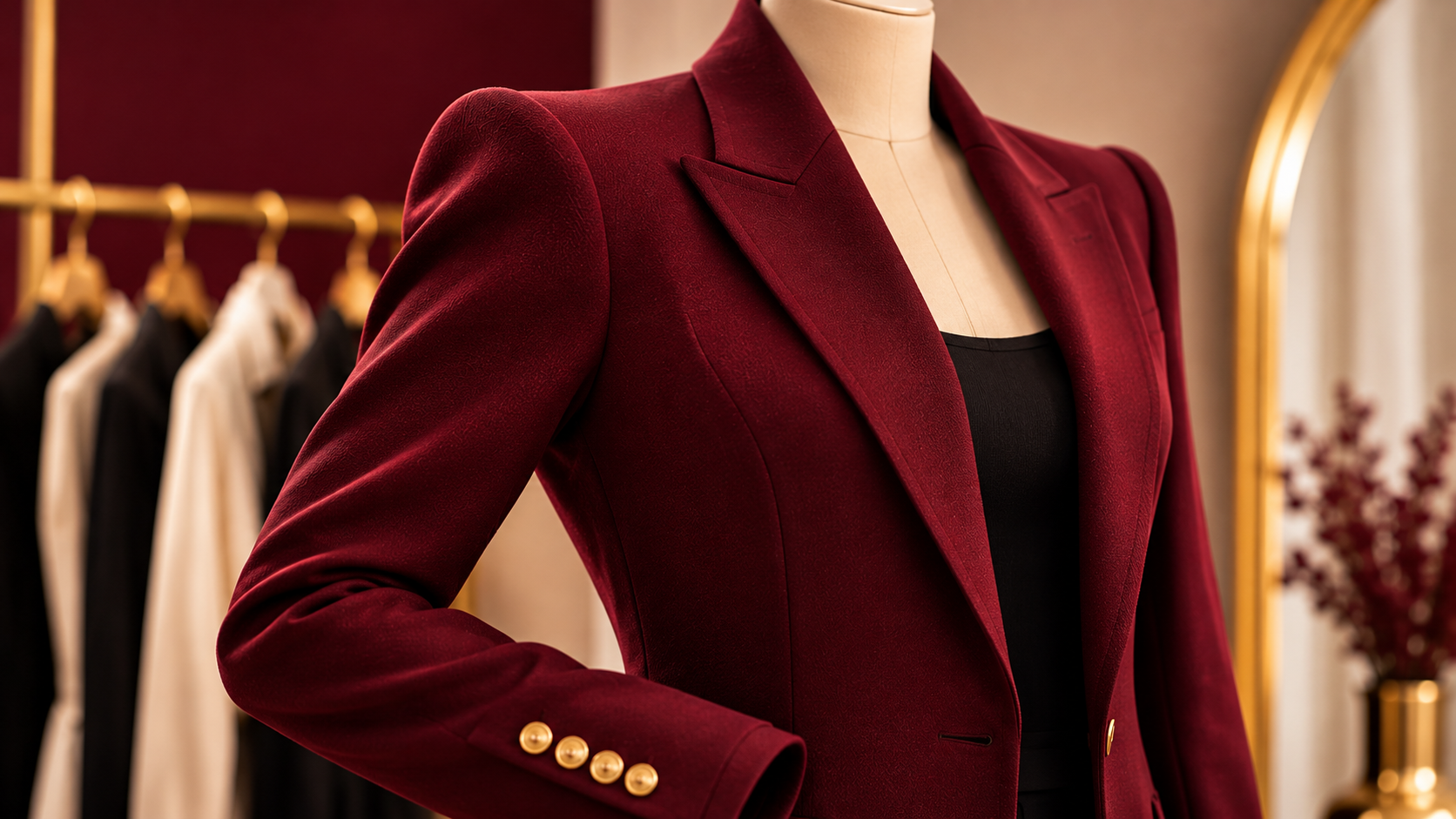
    2. Tailored Longline Blazers

    Look for blazers designed specifically in tall ranges where the armhole (armscye) is set deeper and the shoulder width is proportioned to height. Longline cuts balance broad shoulders by drawing the eye vertically down your frame.

    3. Kimono & Dolman Styles

    Relaxed, flowing sleeve styles give plenty of room across the bust and upper back while offering a sophisticated, chic drape.


    Quick Tailoring & Styling Hacks

    • Embrace the Deliberate Push-Up: If a sweater or blazer sleeve falls just an inch short of your wrist, push or roll the cuffs up to mid-forearm intentionally. It creates an effortless, styled look rather than looking like an ill-fitting garment.
    • Check Sleeve Hem Allowances: Quality coats and tailored blazers often have 1 to 1.5 inches of hidden fabric folded inside the sleeve hem. A local tailor can let this down easily to give you that extra needed length.
    • Layer with Contrast Cuffs: Wear a longer fitted base layer (or ribbed turtleneck) beneath a slightly shorter sweater or jacket, letting the lower cuff peek out stylishly.

    What to Look for When Shopping Tall Brands

    1. Verify Sleeve Lengths in Size Charts: Always look for garment sleeve length measurements rather than relying solely on overall garment length.
    2. Prioritize Stretchy Woven Fabrics: Look for blazers and outerwear blends containing 2%–5% elastane or spandex for necessary give across the upper back.
    3. Watch Armhole Placement: High armholes in standard sizing restrict arm movement for tall frames. Tall-specific sizing re-engineers armhole depth to ensure comfort.

    Final Takeaway

    Long arms and broad shoulders give tall women a striking, athletic frame that looks magnificent in structured outerwear. By knowing your sleeve measurements and prioritizing thoughtful silhouettes, you’ll never have to settle for short sleeves or restricted shoulders again!

  • Torso vs. Leg Length: How to Style Short-Torso or Long-Torso Tall Frames

    Torso vs. Leg Length: How to Style Short-Torso or Long-Torso Tall Frames

    Being tall is rarely just about height—it’s about proportion. Two women can both be 5’11”, yet look completely different in the exact same jumpsuit or high-waisted jeans. Why? It all comes down to vertical proportion: whether you have a short torso with long legs or a long torso with shorter legs.

    Understanding your unique body balance is the key to choosing clothes that flatter your height rather than fight it. Here is your ultimate guide to determining your torso-to-leg ratio and styling your frame with ease.


    How to Determine Your Proportion Type

    Before diving into styling tips, let’s identify where your length sits:

    1. The Ribcage-to-Hip Test: Place your hand flat horizontally under your bust line and another hand flat above your hip bone.
    • If your hands overlap or touch closely, you have a short torso.
    • If there is a noticeable gap (3+ finger widths) between your hands, you have a long torso.
    1. The Waistline Check: Look at where your natural waist curves in relative to your elbows when standing relaxed. Getting the proportions right doesn’t stop at your waistline! If you’re also dealing with sleeves that are too short or jackets that pull across your shoulders, check out our guide to long sleeves and broad shoulders.
    • High natural waist (above or at elbow level) = Short Torso / Long Legs
    • Low natural waist (below elbow level) = Long Torso / Shorter Legs

    Styling a Short-Torso, Long-Legged Tall Frame

    If you have a short torso and long legs, your upper body can easily look compressed, while high-rise pants might seem to end right under your bust.

    The Goal:

    Elongate your torso while honoring your naturally long leg line.

    Key Styling Strategies:

    • Opt for Mid-Rise Over Ultra-High-Rise: Mid-rise bottoms allow your waistline to sit naturally, preventing your torso from looking foreshortened.
    • Wear Untucked or French-Tucked Tops: Leaving tops untucked or giving them a soft, relaxed front-tuck lengthens the visual appearance of your torso.
    • Choose Dropped Waistlines & Shift Dresses: Straight-cut dresses and drop-waist silhouettes balance out long legs and create a seamless vertical line.
    • Incorporate Longline Layers: Duster cardigans, open blazers, and long trench coats draw the eye down, extending your upper body visually.

    Styling a Long-Torso, Long-Legged Tall Frame

    If your height comes mostly from a elongated torso, standard tops often fit like crop tops, and lower-rise bottoms can make your legs appear shorter than they are.

    The Goal:

    Create a higher visual waistline and maximize leg length.

    Key Styling Strategies:

    • Embrace High-Rise & Ultra-High-Rise: 11″+ rises sit at your true natural waist, instantly elongating your leg line.
    • Master the Full Tuck & Belts: Tuck tops securely into high-waisted bottoms and add a belt to define your waist higher up.
    • Choose Crop Tops & Cropped Jackets: Hemlines that end at or slightly above your natural waist visually reset your proportions.
    • Wear Wide-Leg Trousers & Floor-Sweeping Maxis: Volume and continuous length on the bottom half elongate legs dramatically.

    Universal Proportion Rules for Tall Frames

    Regardless of where your height is distributed, keep these universal style principles in mind:

    1. Mind the Shoulder Seams: Proper shoulder width prevents oversized garments from overwhelming long torsos or frames.
    2. Watch Sleeve Lengths: Long sleeves should end right at the base of your thumb.
    3. Use Monochromatic Outfits: Matching top and bottom colors creates an uninterrupted column of color that elongates both torso and legs smoothly.

    Final Takeaway

    Knowing your torso-to-leg balance allows you to shop with intention and make simple silhouette tweaks that celebrate your height. Honor your unique frame and wear what makes you feel confident!

  • The Ultimate Guide to Inseams: How to Measure and Shop for Your Height

    The Ultimate Guide to Inseams: How to Measure and Shop for Your Height

    Finding pants that actually hit where they’re supposed to can feel like a full-time job when you’re tall. We’ve all been there: you spot a stunning pair of trousers online, order them in a “Tall” size, only to open the package and realize they sit awkwardly above your ankles or drag under your heels.

    Understanding your exact inseam measurement—and how different shoe heights and rise styles alter what you need—is the single most effective way to eliminate online shopping guesswork.

    Here is your complete guide to measuring, calculating, and shopping for your ideal inseam length.


    What Is an Inseam, Exactly?

    The inseam is the distance along the inner leg of a pair of pants, measured from the lowest point of the crotch seam straight down to the bottom hem of the leg.

    It is distinct from the outseam (which measures from the top of the waistband down the outside of the leg) and the rise (the distance from the crotch seam up to the top of the waistband).


    How to Measure Your Inseam (2 Easy Methods)

    Method 1: The Favorite Pants Trick (Easiest)

    1. Take a pair of pants from your closet that already fits you perfectly in length.
    2. Lay them flat on a hard surface (like a floor or table) and smooth out any wrinkles.
    3. Fold one leg back over the waistband so the inner seam of the other leg is fully visible.
    4. Using a flexible measuring tape, measure from the center crotch seam straight down along the inner seam to the edge of the leg hem.

    Method 2: Measuring Your Body Directly

    1. Wear a close-fitting pair of leggings or underwear.
    2. Stand straight with your back against a wall and feet slightly apart.
    3. Place a firm book upright between your upper thighs, resting against your pubic bone (mimicking where the crotch seam of pants sits).
    4. Run a tape measure from the top edge of the book straight down to the floor along your inner ankle bone.
      Tip: Have a friend assist with this method to ensure you don’t bend your knees or lean over while taking the reading.

    Standard Tall Inseam Reference Guide

    While every body ratio is unique, here is how inseam requirements typically align with overall height for full-length pants:

    • 5’8″ – 5’10”: 32″ to 34″ inseam
    • 5’11” – 6’1″: 35″ to 37″ inseam
    • 6’2″ and above: 38″+ inseam

    Looking for jeans with serious length? Our Tall Fashion FBI investigated Alexander Jane Boutique’s advertised 40-inch raw hem. Read Case #002: Is Alexander Jane’s 40-Inch Inseam the Real Deal? to see what we uncovered.

    Note: Your leg-to-torso ratio matters! A 5’9″ woman with long legs and a short torso may need a 36″ inseam, while a 6’0″ woman with a long torso may fit comfortably in a 34″ inseam.


    How Shoes & Styles Change Your Needed Inseam

    Your inseam isn’t a single static number—it shifts depending on the style of pant and the footwear you pair with it:

    • For Flats, Sneakers, and Sandals: Stick strictly to your true floor-to-crotch measurement minus 0.5 to 1 inch so the hem clears the ground.
    • For Heels and Boots: Add 1 to 3 inches to your baseline inseam, depending on heel height, so the hem covers the top of the shoe without dragging.
    • For Wide-Leg Trousers: Wide-leg styles visually look best when they extend almost to the floor. Add 1 inch to your standard measurement.
    • For Ankle / Cropped Styles: Subtract 3 to 5 inches from your full-length inseam.

    Smart Tips for Shopping Tall Brands Online

    1. Always Check the Product Details: Don’t rely solely on the label “Tall.” Read the actual item description to verify the exact inseam listed for that specific piece.
    2. Account for Fabric Shrinkage: Natural fibers like 100% cotton denim, linen, or wool blends can shrink up to 1 inch in length over multiple washes. If you’re on the border between sizes, opt for the longer inseam.
    3. Check the Model’s Height: Most fashion sites list the model’s height and the size she is wearing. If a 5’11” model is wearing a size small with an ankle crop, you can gauge where that same hem will hit on your frame.

    Final Takeaway

    Knowing your exact inseam numbers takes the frustration out of online shopping and ensures every pair of pants you buy flatters your height and proportions effortlessly.

    Keep a small note on your phone with your baseline measurements for flats, heels, and cropped styles so you’re always ready when browsing new collections!